Hardware revisions
Hint
The devices manufactured by 1BitSquared and sold by CrowdSupply and Mouser use the hardware revision revC3.
The Glasgow hardware evolves over time, with each major milestone called a “revision”. Although all revisions are, and will always be supported with the latest software stack, they vary significantly in their capabilities, and the revision that is being used will determine which tasks can be achieved using the hardware.
Glasgow hardware revisions use the revXN format, where X is a revision letter (advanced alphabetically when major design changes are made) and N is a stepping number (incremented on any layout or component changes). For example, revC0 is the first stepping of revision C.
Technical descriptions
In-depth technical descriptions are available for certain hardware revisions:
revD
Revision D is the latest revision, currently in pre-launch stage on CrowdSupply. It provides 32 I/O pins with a data rate up to approx. 100 Mbps/pin (50 MHz) [1], independent direction control and independently programmable pull-up/pull-down resistors. The I/O pins are grouped into four I/O ports, each of which can use any I/O standard from 1.2 V to 5 V, sense and monitor I/O voltage of the device under test, provide up to 300 mA of power, and measure analog voltages on two dedicated pins (single-ended or differential; 24 bit @ 500 kSPS across all enabled channels). The board uses USB 2 for power, configuration, and communication, achieving up to 336 Mbps (42 MB/s) of sustained combined throughput. Except for USB connectivity, every aspect of the device has been significantly improved compared to revC.
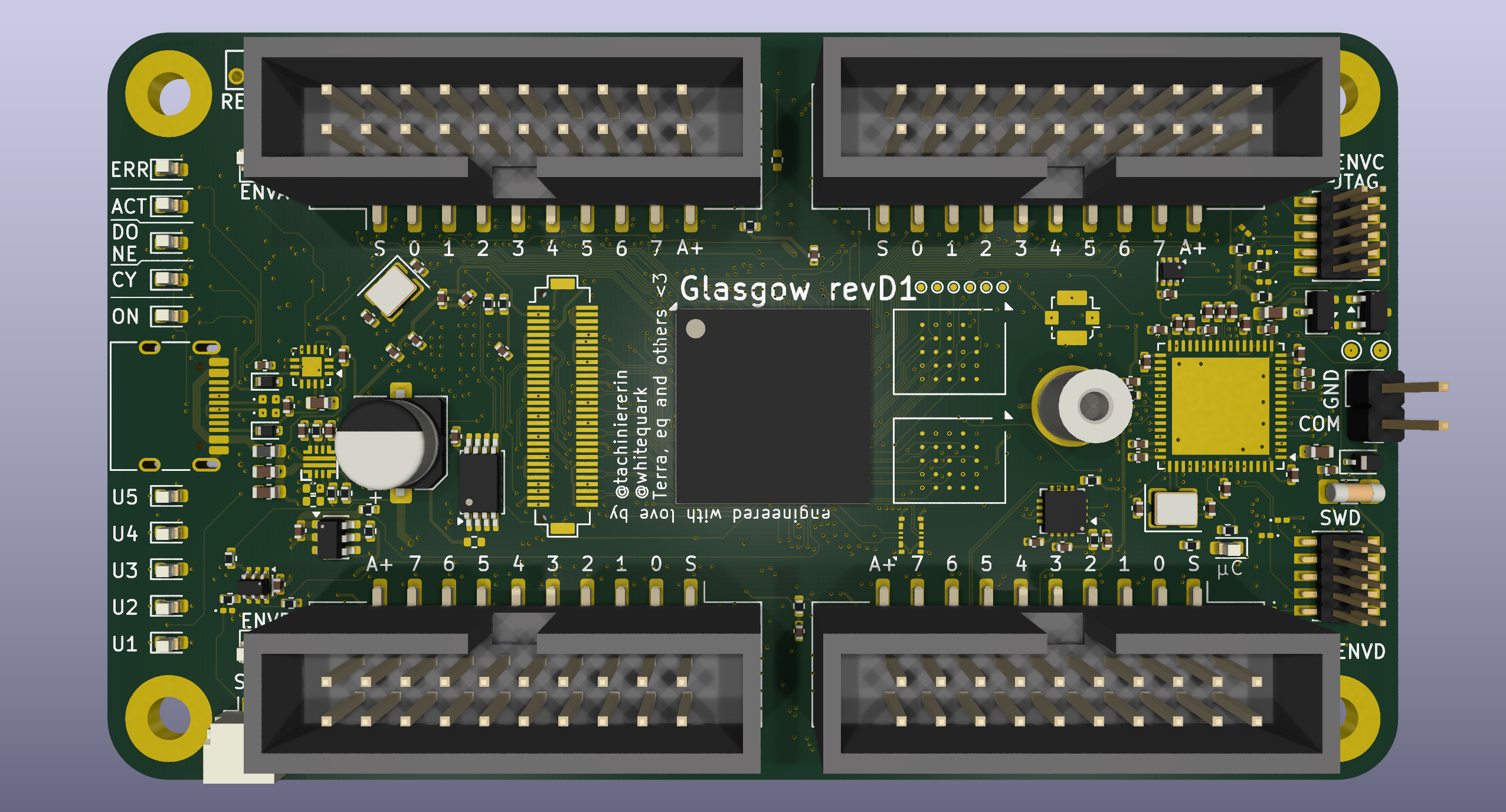
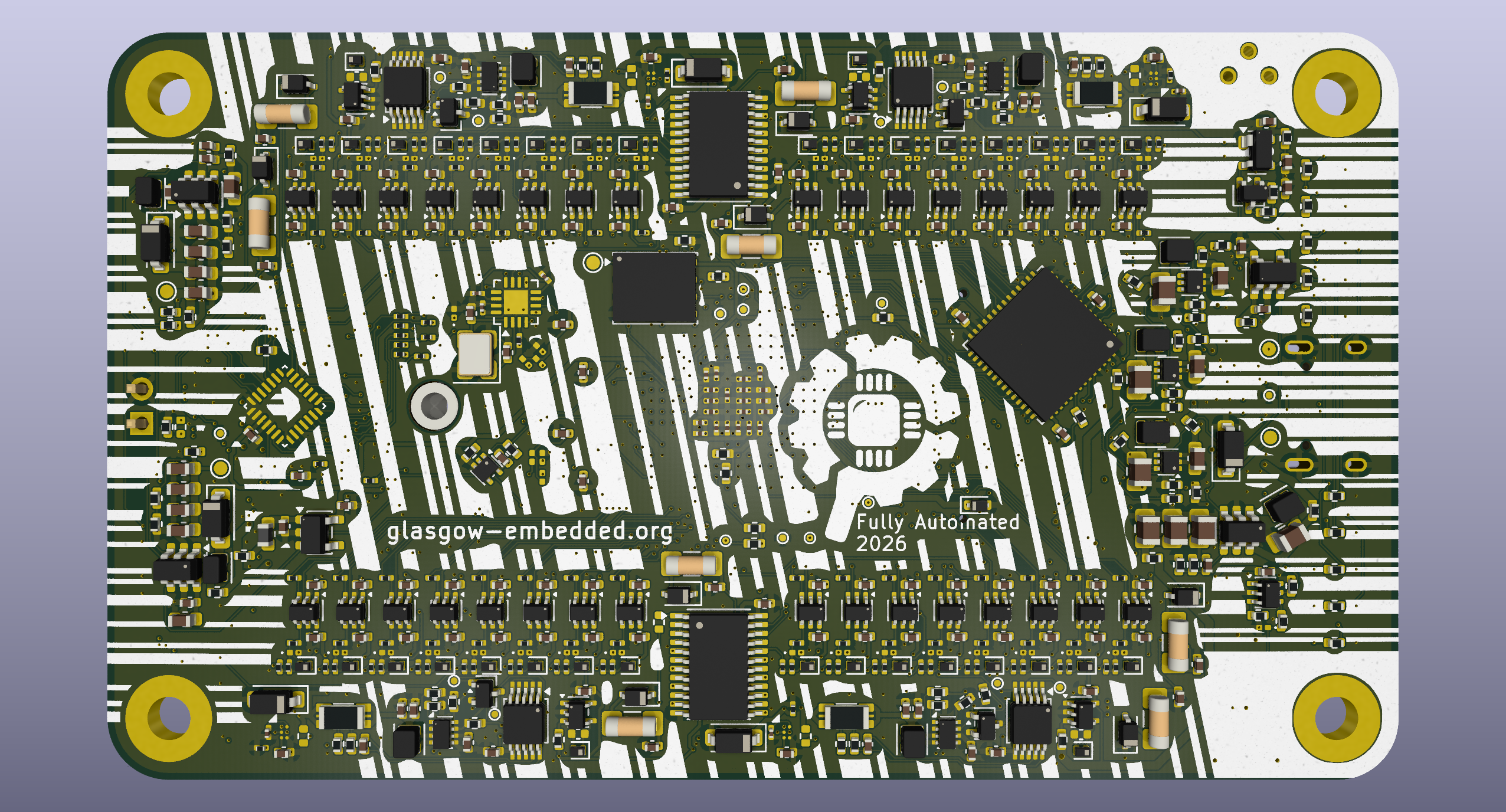
Design and fabrication files are located in the Git repository:
revC
Revision C was first mass produced by 1bitSquared at stepping revC3. It provides 16 I/O pins with a data rate up to approx. 100 Mbps/pin (50 MHz) [2], independent direction control and independently programmable pull-up/pull-down resistors. The I/O pins are grouped into two I/O ports, each of which can use any I/O standard from 1.8 V to 5 V, sense and monitor I/O voltage of the device under test, as well as provide up to 150 mA of power. The board uses USB 2 for power, configuration, and communication, achieving up to 336 Mbps (42 MB/s) of sustained combined throughput.
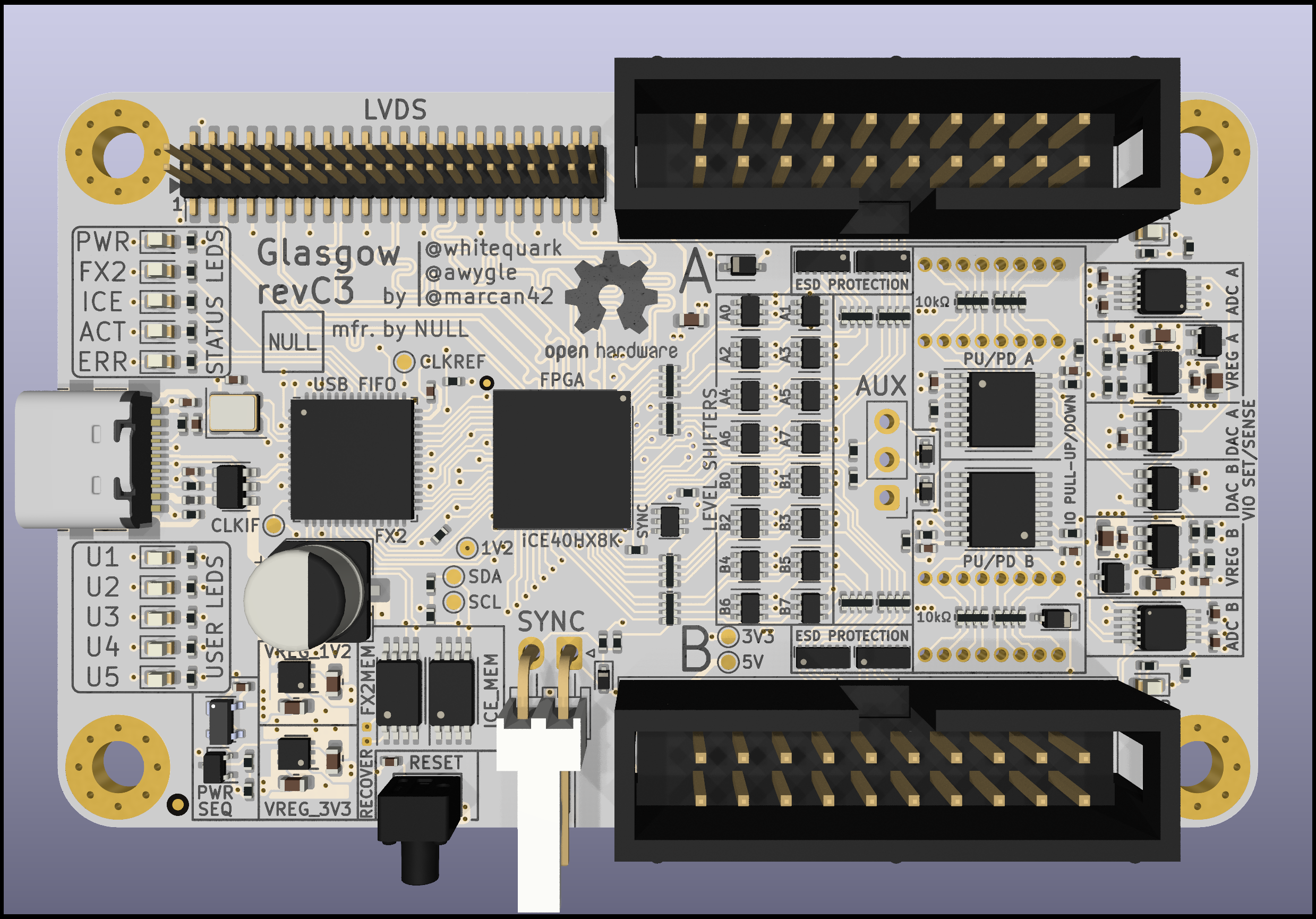
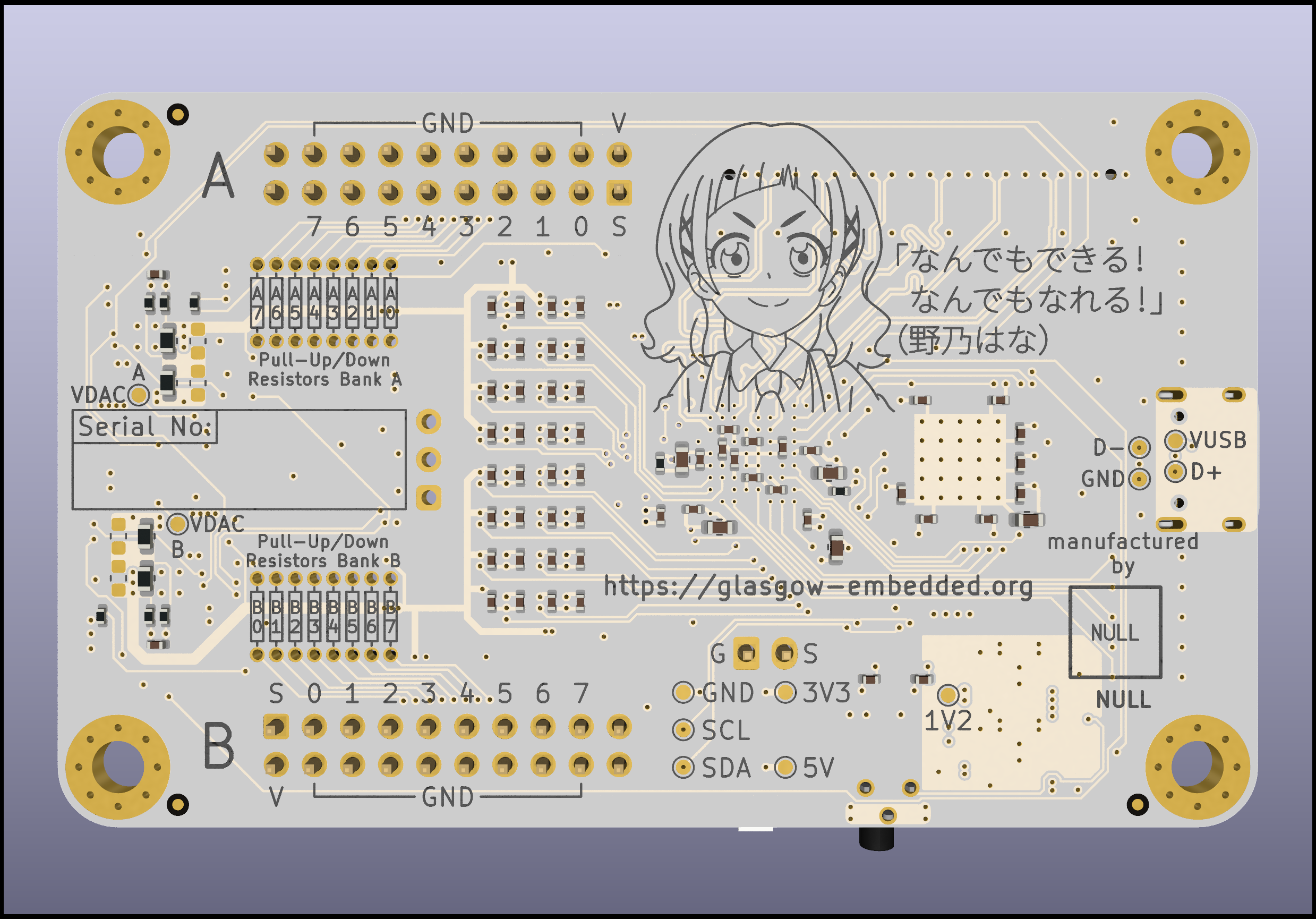
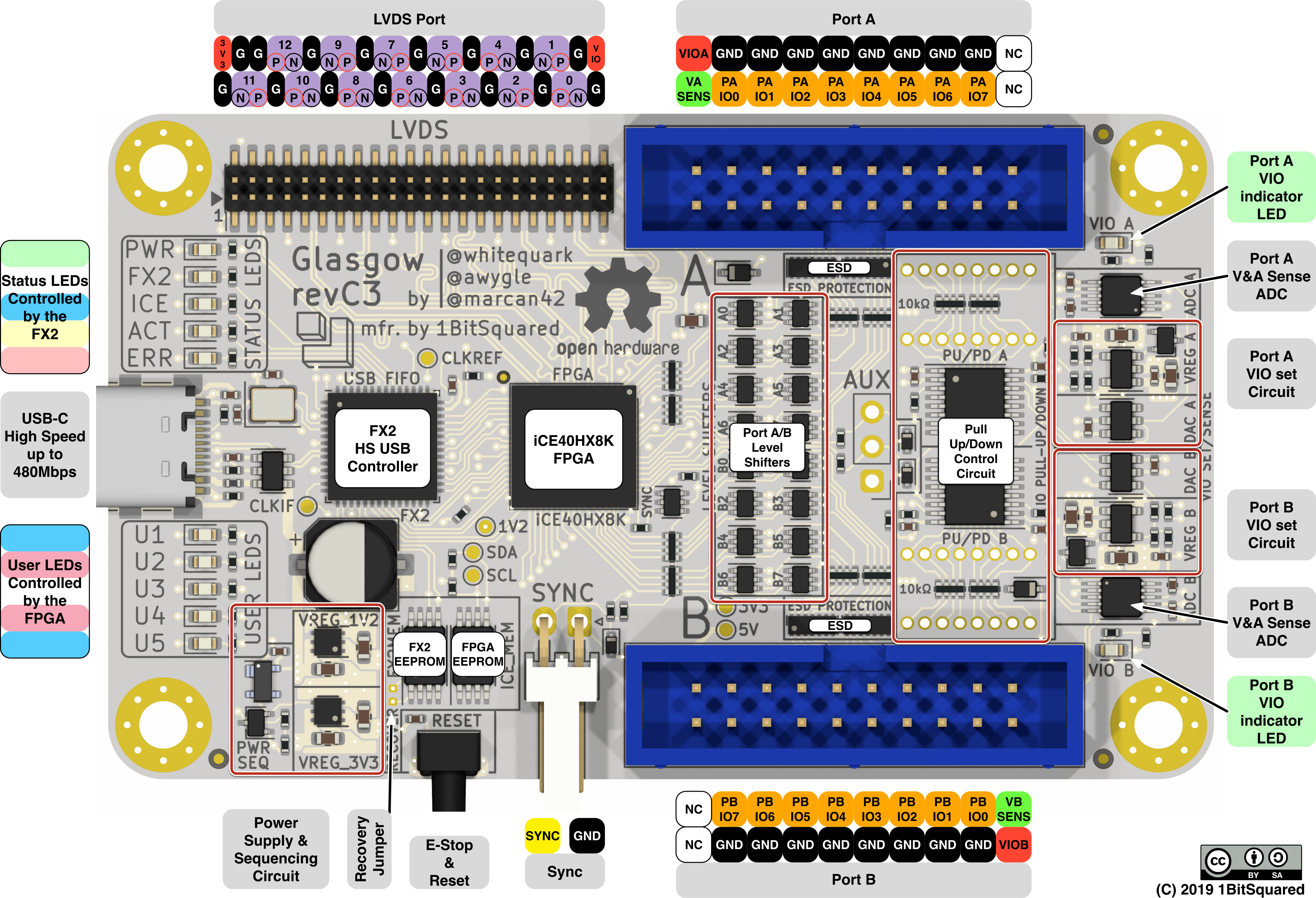
Design and fabrication files are located in the Git repository:
revA, revB
Revisions A and B have not been produced in significant numbers, have major design issues, and are therefore mostly of historical interest. Nevertheless, anyone who has one of the revA/revB boards can keep using them—forever.
Design and fabrication files are located in the Git repository: